Colour as a Global Language
Assigning a universal classification to every colour stems from a very practical need: to communicate a proposed or desired colour clearly, unambiguously and consistently—even at a distance, without direct contact or an immediate physical reference.
From this perspective, the RAL colour system can be compared to a true international language of colour. An effective parallel can be drawn with Western music theory and its 12 notes (7 natural notes and 5 accidentals).
Both systems address the same challenge: conveying complex information in a standardised, recognisable and universally interpretable way, without the need to actually see the colour or hear the music.
Unlike other colour coding systems such as Pantone (used in printing) or NCS (Natural Colour System, based on human visual perception), RAL is grounded in the physical properties of industrial coatings and opaque materials. This makes it an objective and measurable system.
RAL, therefore, is not just a visual colour scale, but a universal visual communication system and an exceptionally effective working tool.
Origins and Global Adoption of the RAL System
The RAL colour system was developed in Germany in 1925 by the Reichs-Ausschuss für Lieferbedingungen (German Reich Committee for Terms and Conditions of Sale), from which the acronym RAL originates.
Its original objective was straightforward: to standardise colours used in industry, eliminate subjective interpretations, and facilitate clear communication between manufacturers, designers and end users.
Over the course of a century, RAL has become a global reference standard for:
- industrial paints and coatings;
- industrial planning;
- architecture and design;
- windows, doors and building components;
- powder coating applications.
Definition and Classification of RAL Colours
The first official RAL collection, known as RAL 840, was introduced in 1927 and featured 40 colours. Of these, 30 are still in use today—clear evidence of the system’s robustness.
Over time, the system has expanded significantly to accommodate evolving technical, aesthetic and industrial requirements.
RAL Classic: The Two Historic Scales
The RAL Classic system consists of two main scales:
- RAL 840-HR: matte colours (213 colours)
- RAL 841-GL: glossy colours (196 colours)
Each colour is identified by a four-digit numerical code, where the first digit indicates the colour family.
RAL Colour Families
- 1xxx – Yellows: from RAL 1000 Green beige to RAL 1034 Pastel yellow
- 2xxx – Oranges: from RAL 2000 Yellow orange to RAL 2013 Pearl orange
- 3xxx – Reds: from RAL 3000 Flame red to RAL 3031 Oriental red
- 4xxx – Violets: from RAL 4001 Red lilac to RAL 4012 Pearl blackberry
- 5xxx – Blues: from RAL 5000 Violet blue to RAL 5026 Pearl night blue
- 6xxx – Greens: from RAL 6000 Patina green to RAL 6038 Luminous green
- 7xxx – Greys: from RAL 7000 Squirrel grey to RAL 7048 Pearl mouse grey
- 8xxx – Browns: from RAL 8000 Green brown to RAL 8029 Pearl copper
- 9xxx – Whites and blacks: from RAL 9001 Cream white to RAL 9023 Pearl dark grey
The Main RAL Collections Available Today
Over time, the RAL system has evolved into several collections, each designed for specific applications:
- RAL Classic
The most widely used collection in industrial applications and powder coating.
As of 2025, it includes approximately 216 standardised colours, identified by four-digit codes (e.g. RAL 1021). - RAL Design System plus
Developed for professional architecture and design.
It includes 1,825 colours organised according to hue, lightness and saturation.
Colours are identified by seven-digit codes (e.g. RAL 090 85 05). - RAL Effect
A collection aimed at modern industrial applications.
It includes 490 colours, featuring metallic and high-gloss finishes, developed with a strong focus on material sustainability.
Standardisation and Creativity: A False Myth
Colour—consciously or unconsciously—influences emotions, perception and identity. For over a century, the RAL system has supported everyday colour communication by providing a shared, universal reference, from industry to architecture, from design to commerce.
It is often assumed that a universal colour coding system like RAL limits creativity in industrial, architectural or design contexts. In reality, the opposite is true.
In serial production environments, having a shared chromatic reference enables precise, communicable, traceable and repeatable customisation, while maintaining long-term consistency and reliability—even when personal variations and nuanced adjustments are applied to the standard.
RAL and Powder Coating: An Essential Standard
In the powder coating industry, the RAL system has become indispensable.
Its strength lies in colour repeatability, formulation accuracy and the ability to ensure reliable colour matching across:
- design;
- colour samples;
- production;
- finished products.
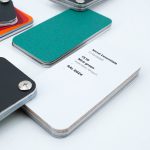
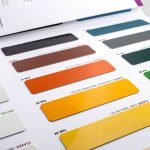
This makes RAL an ideal reference both for powder coating processes and for the production of aluminium colour samples (colour fan decks and aluminium colour folders), which MDM has been manufacturing as a fully integrated producer for the Italian and European markets for over 15 years.