
Aluminium: The Many Lives of an Ever More Valuable Metal
Aluminium is a ductile, lightweight metal with its distinctive silvery-white appearance. It is an excellent conductor of heat and electricity, highly reflective, and almost infinitely recyclable without losing any of its original properties. Around 75% of all the aluminium produced since the late nineteenth century is still in use today, although often in forms completely different from those in which it was originally manufactured.
Naturally occurring in the Earth’s crust, where it accounts for approximately 8% of its composition, aluminium is the most abundant metal on the planet. Today, it is also the second most widely used metal in the world after steel. Since its industrial-scale introduction in the late 1800s, global demand has grown rapidly, reaching around 29 million tonnes per year, of which approximately 22 million tonnes come from primary aluminium and 7 million tonnes from recycled scrap.
Thanks to its exceptional combination of properties – light weight, strength, versatility, and a strength-to-weight ratio superior to that of steel – aluminium has become a symbol of modern industry and a leading material across countless sectors.
Recycling aluminium requires approximately 95% less energy than producing primary aluminium from bauxite. For this reason, it is often described as an “energy bank”, capable of preserving its value through an unlimited number of life cycles.
A Truly Universal Metal: Aluminium Is Everywhere Around Us
Aluminium is extensively used in the energy sector, architectural systems and construction, automotive manufacturing, aerospace and marine industries, food packaging, electronics and related technologies, as well as e-mobility and modern transportation systems.
In the aerospace industry, its outstanding strength-to-weight ratio has revolutionised aircraft design. In the automotive sector, aluminium helps reduce vehicle weight, improving efficiency, lowering fuel consumption, and extending the driving range of electric vehicles. In construction, it makes it possible to create elegant, lightweight, and durable structures with increasingly slim, minimalist profiles. Within the window and door industry, aluminium enables the production of sleek yet highly resistant framing systems.
Modern technology also relies heavily on aluminium. Smartphones, laptops, tablets, and computers frequently use aluminium housings and components not only for their premium appearance but, above all, for their excellent thermal conductivity, which efficiently dissipates heat away from sensitive electronic components.
In the energy and electrical infrastructure sectors, aluminium’s low weight and excellent electrical conductivity make it the preferred material for high-voltage transmission lines, electrical systems, and renewable energy technologies. Many support structures for photovoltaic installations and components used in wind turbines are manufactured from aluminium.
Alongside these highly technological applications, aluminium also plays a quiet yet essential role in everyday life through food packaging. Beverage cans, trays, pharmaceutical blister packs, foils, and containers rely on aluminium’s ability to protect products from light, air, moisture, and bacterial contamination, preserving their quality and nutritional value without affecting taste or aroma – even at extremely thin gauges of just 0.007 mm.
Characteristics, Properties and Advantages of Aluminium
Aluminium owes its outstanding performance to a combination of technical properties that is virtually unmatched.
Corrosion Resistance. When exposed to air and moisture, aluminium naturally forms an extremely thin oxide layer that protects it against atmospheric agents, particularly in industrial environments. Surface treatments such as anodizing – an electrochemical process that creates a protective, porous layer of aluminium oxide – can further enhance this protection while also improving the material’s aesthetic appeal.
Thermal and Electrical Conductivity. Aluminium’s thermal conductivity is approximately 50–60% that of copper, making it an excellent choice for cookware and heat exchangers used in the chemical, food-processing, and aerospace industries. In terms of electrical conductivity, it reaches around 62% of the International Annealed Copper Standard (IACS) while weighing only about one-third as much as copper.
Reflectivity. Smooth aluminium surfaces reflect approximately 80% of visible light and up to 90% of radiant heat, making the material valuable not only for its visual appeal but also for technical applications such as roofing systems and thermal shielding.
Non-Toxicity. Aluminium is safe for direct contact with food, which is why it is widely used in cookware and food packaging without posing any health risks.
Recyclability. As mentioned earlier, aluminium is one of the most recyclable materials available. Recycled aluminium retains virtually all the properties of primary aluminium while requiring only around 5% of the energy needed for primary production. Today, approximately 60% of aluminium reaches end-of-life recovery, with Italy standing out as one of Europe’s leading performers. The country achieves a 69.5% recycling rate for aluminium packaging and an overall recovery rate of 72.9%. Beverage cans perform even better, reaching an impressive 92.8% recycling rate, well above the European average of 76.3% and already exceeding the targets set by the European Union for 2030.
Mechanical Strength. Pure aluminium has a tensile strength of approximately 90 MPa, but this can be significantly increased through processes such as cold rolling or by creating alloys with elements including copper, manganese, and silicon, which can be further strengthened through heat treatment.
Excellent Strength-to-Weight Ratio. This is one of aluminium’s greatest advantages. It allows manufacturers to create lightweight yet extremely strong structures, making it ideal for transportation applications such as cars, ships, and aircraft.
Ease of Processing. Aluminium can be rolled, stamped, extruded, or machined at high speed with remarkable efficiency. This ease of fabrication also contributes to lower manufacturing costs.
Ductility and Malleability. Aluminium can be drawn into fine wires and shaped with exceptional ease. In its molten state, it is extraordinarily versatile and can be transformed into a vast range of products, including sheets, tubes, and bars. From ultra-thin food foil to structural beams supporting entire buildings, aluminium demonstrates remarkable adaptability.
Performance at Low Temperatures. Unlike many other metals, aluminium does not become brittle in cold environments. On the contrary, its mechanical strength and corrosion resistance actually improve, making it particularly suitable for demanding low-temperature applications.
Impermeability and Neutrality. Even in extremely thin gauges, aluminium provides an effective barrier against moisture while preserving the taste and aroma of packaged products, making it indispensable in the food packaging industry.
Non-Magnetic Properties. Aluminium is not attracted by magnetic fields, making it suitable for a wide range of electronic applications and electromagnetic shielding.
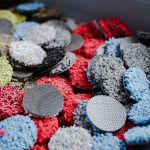
Sound and Impact Absorption. Particularly when produced in foam or porous forms, aluminium offers excellent sound-absorbing properties, making it valuable in both construction and the automotive industry for reducing noise and vibration.
Surface Finishes. In many applications aluminium requires no additional protective coatings. When desired, however, it can be enhanced through brushing, shot blasting, powder coating, or electrochemical treatments such as anodising, offering virtually unlimited aesthetic possibilities.
Primary Aluminium vs Recycled Aluminium: The State of the Art
Today, the distinction between primary aluminium and recycled aluminium has become increasingly important. Primary aluminium is produced directly from bauxite through highly energy-intensive industrial processes. Recycled aluminium, on the other hand, is obtained by remelting scrap metal, production offcuts, old window frames, beverage cans, and other aluminium components.
From a technical perspective, recycled aluminium can achieve performance levels that are extremely close to those of primary aluminium. Any differences mainly depend on the quality of alloy separation and the control of residual impurities. However, advances in sorting and refining technologies are making recycled aluminium increasingly high-performing, to the point that it has already become the standard production material across many industrial sectors.
The future of aluminium is closely linked to circular economy models and closed-loop supply chains, in which production waste is continuously transformed into new raw material without losing value. Advanced sorting systems and increasingly sophisticated recycling technologies will make it possible to produce materials that are even more consistent, sustainable, and efficient in the years ahead.
Aluminium Alloys for Windows, Doors and Architecture
From a mechanical standpoint, pure aluminium is too soft for many structural applications. This is why it is alloyed with elements such as magnesium and silicon, creating the well-known 6000 series alloys, which are widely used in the architectural and window manufacturing industries.
6060 Alloy (AlMgSi)
The 6060 alloy is the benchmark material for architectural aluminium profiles. It is highly valued for its excellent extrudability, allowing manufacturers to produce complex, slim, and elegant profiles, while also delivering outstanding results with surface treatments such as anodising and powder coating.
6063 Alloy
Very similar to 6060, the 6063 alloy offers slightly higher tensile strength and hardness. It is often preferred for larger structures or whenever flawless aesthetics after finishing are a priority.
6082 Alloy
Although less common for standard architectural profiles, 6082 alloy is widely used for structural components and large window or door systems requiring even greater mechanical strength.
These alloys combine exceptional dimensional precision with outstanding mechanical performance and premium-quality surface finishes, offering several key advantages.
Minimalist Design
Thanks to the high strength of 6060 alloy, manufacturers can produce exceptionally slim profiles for windows, doors, and curtain walls, maximising glazed surfaces and natural light while meeting contemporary architectural trends.
Virtually Maintenance-Free
Aluminium naturally develops a protective oxide layer that makes it highly resistant to rust and even the most aggressive weather conditions.
Complete Sustainability
At the end of their service life, aluminium profiles are 100% recyclable, delivering significant energy savings compared with producing new primary aluminium.
Unlimited Aesthetic Possibilities
Thanks to epoxy powder coating, aluminium profiles can be finished in virtually any colour, shade, texture, or visual effect while maintaining excellent durability and long-term performance.
Powder Coating: Protection Meets Aesthetics
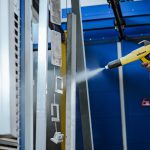
Surface treatment technology for aluminium has reached exceptionally high standards. Epoxy powder coating, now widely adopted across the industry, offers numerous advantages over traditional liquid coating systems. From an aesthetic perspective, it produces a smooth, uniform finish free from imperfections or inconsistencies, giving products a premium, professional appearance while also reducing environmental impact.
Before powder coating, aluminium undergoes a critical surface pre-treatment process, which typically includes degreasing, rinsing, phosphating, or advanced nanotechnology treatments. This is the most crucial stage of the entire coating process, as it largely determines the final quality of the finished product.
Proper pre-treatment:
- improves paint adhesion to the substrate;
- increases resistance to corrosion, moisture, and chemical agents;
- ensures a clean, activated, and uniform surface;
- reduces coating defects such as peeling, blistering, and delamination.
This sophisticated manufacturing process has evolved steadily over the years. Today, aluminium is an extraordinarily versatile material capable of replacing far more expensive and difficult-to-handle alloys in both manufacturing and transportation.
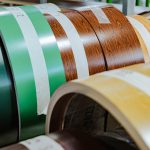
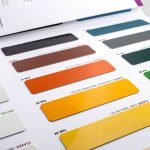
From ultra-thin household aluminium foil to contemporary architectural masterpieces, from aluminium colour sample collections to advanced industrial components, aluminium continues to demonstrate an unmatched ability to adapt to the needs of both the present and the future. It is a modern, elegant, technologically advanced, and sustainable material—a metal that continues to reinvent itself in countless new ways.
MDM’s Powder Coating Facility
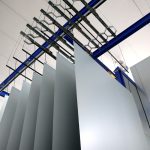
MDM Campionari operates a modern powder coating facility dedicated to aluminium processing. Equipped with automatic and semi-automatic production lines featuring Wagner technology, the plant represents a key part of our value proposition by combining industrial-quality finishing with exceptional production flexibility.
Unlike many industrial coating providers, we also accept small production runs, starting from a single component, one square metre, one linear metre, or small accessories.
Epoxy powder coating enhances aluminium’s natural appearance while significantly improving its resistance to weathering, corrosion, and oxidation, ensuring long-lasting durability even in demanding environments.
Ultimately, aluminium is far more than just a material – it is a promise of quality, durability, and design excellence. At MDM Campionari, we fulfil that promise through precision manufacturing, advanced technologies, and meticulous attention to every colour and structural detail.
Aluminium: The Core Material Behind MDM
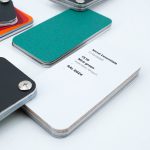
At MDM, aluminium is both a source of inspiration and the essential material behind many of our products. It forms the structural core of our colour fan decks and sample books, our modular display stands for insect screens and roller shutters, as well as our custom-made covers for colour sample collections.
Through our epoxy powder coating process, we enhance aluminium’s natural qualities, combining outstanding aesthetics with long-term durability and superior technical performance.
MDM Aluminium Sample Collections
MDM sample collections harness the advantages of aluminium to overcome the limitations of traditional heavy, bulky, and perishable display systems. Aluminium provides an exceptionally lightweight yet rigid structure, making it the ideal solution for professionals who handle and present samples every day. Its refined metallic appearance also creates a neutral and elegant frame that enhances colours, finishes, and textures without distracting from the products themselves.
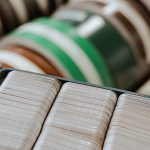
Aluminium colour fan decks and aluminium sample books are essential tools for companies operating in the powder coating, surface finishing, and industrial materials sectors. For over 15 years, MDM Campionari has been designing and manufacturing custom aluminium sample collections for businesses that demand precision, visual consistency, and strong brand identity.
We also design and manufacture custom covers for colour fan decks, available not only in aluminium but also in PVC and polypropylene, offering tailor-made solutions to suit every application.
Sample Cases
Designed for sales professionals, MDM’s aluminium and/or polypropylene sample cases combine outstanding protection with a premium look and feel.
The aluminium shell protects the contents from impacts, crushing, and the temperature fluctuations typical of transportation. At the same time, its elegant appearance immediately communicates attention to detail, reliability, and professionalism from the very first customer meeting – a true example of in-house engineering and craftsmanship.
Each sample case is manufactured to order and can also be supplied in small production runs. Three material configurations are available:
- Aluminium, 1.2 mm thick;
- Polypropylene, 1.5 mm thick;
- Hybrid construction, combining an aluminium structure with polypropylene components.
Modular Display Systems for Insect Screens and Roller Shutters
MDM’s modular display systems solve the weight and bulk issues associated with traditional display structures.
Manufactured from aluminium composite panels, they combine structural strength, lightweight construction, and premium aesthetics. The modular design makes them easy to assemble, configure, transport, and reposition in showrooms, exhibition stands, and retail spaces.
Despite their remarkably low weight, these aluminium structures provide outstanding stability, capable of supporting the actual operating mechanisms of insect screens, Venetian blinds, awnings, and roller shutters without bending or losing rigidity over time.
The result is a display solution specifically designed to showcase products effectively while strengthening brand identity through durable, professional, and fully customisable systems.
Conclusion
Aluminium is one of those materials whose familiarity often leads us to underestimate its importance. Yet without it, much of modern industry simply would not exist.
Its unique ability to combine lightness, strength, precision, sustainability, and design flexibility ensures that it will remain one of the world’s most important engineering materials for decades to come.
However, transforming these qualities into truly high-performance products requires far more than selecting the right material. It demands expertise, advanced technology, and rigorous control throughout every stage of the manufacturing process.
That is where MDM Campionari makes the difference.
For us, aluminium is not simply a raw material – it is the foundation for creating tools that help companies present, showcase, and sell their products more effectively.
Because when innovation, design, and expertise come together, even a metal can become a powerful communication tool.